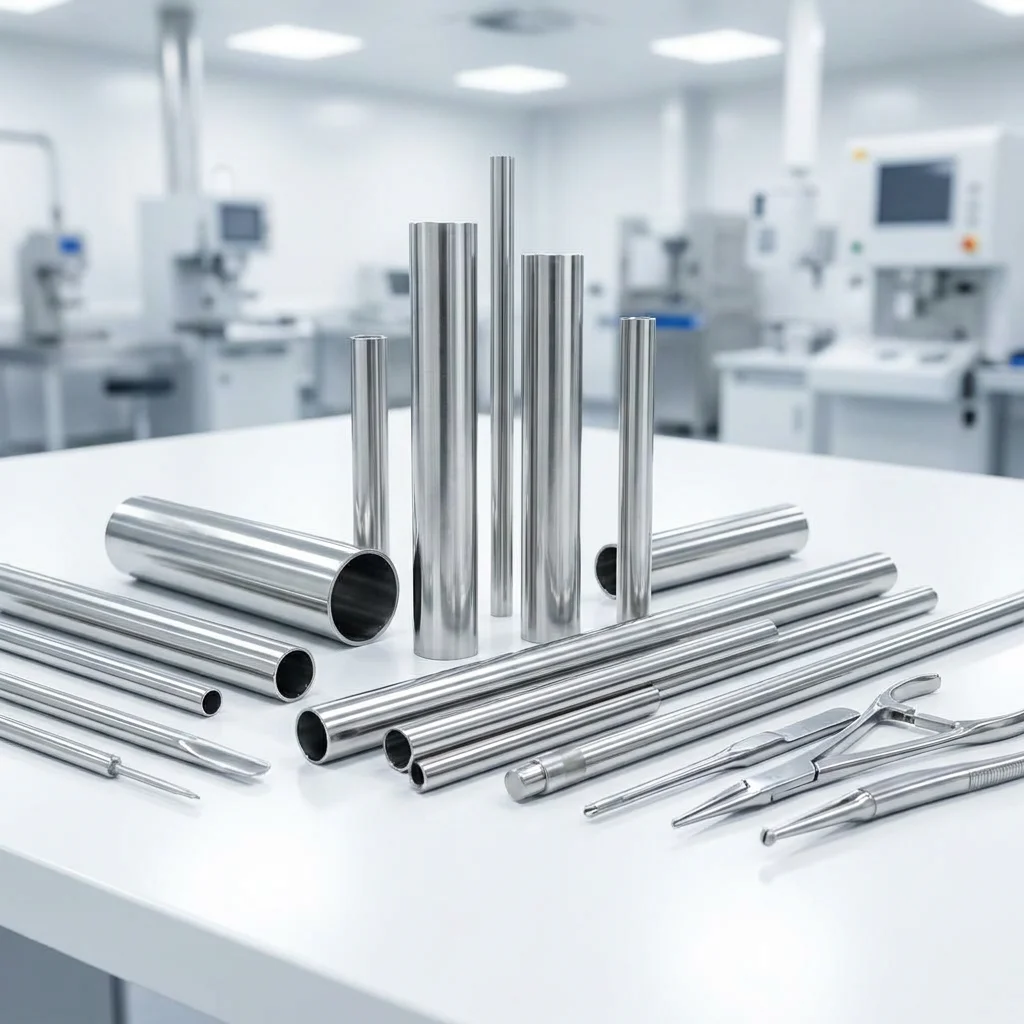
Medical Titanium & Pure Nickel Manufacturers: 2026 Advanced Material Sourcing Guide
Published on: June 8, 2026
In the highly demanding landscape of 2026 industrial manufacturing, selecting high-performance alloys is a critical technical decision. Global medical device manufacturers, chemical processors, and high-tech engineering firms require materials with unmatched purity, mechanical strength, and corrosion resistance. As a leading medical stainless steel manufacturer and advanced metal supplier, we recognize that material reliability determines the ultimate safety and operational lifespan of critical components.
I. The Evolution of High-Performance Alloys in 2026
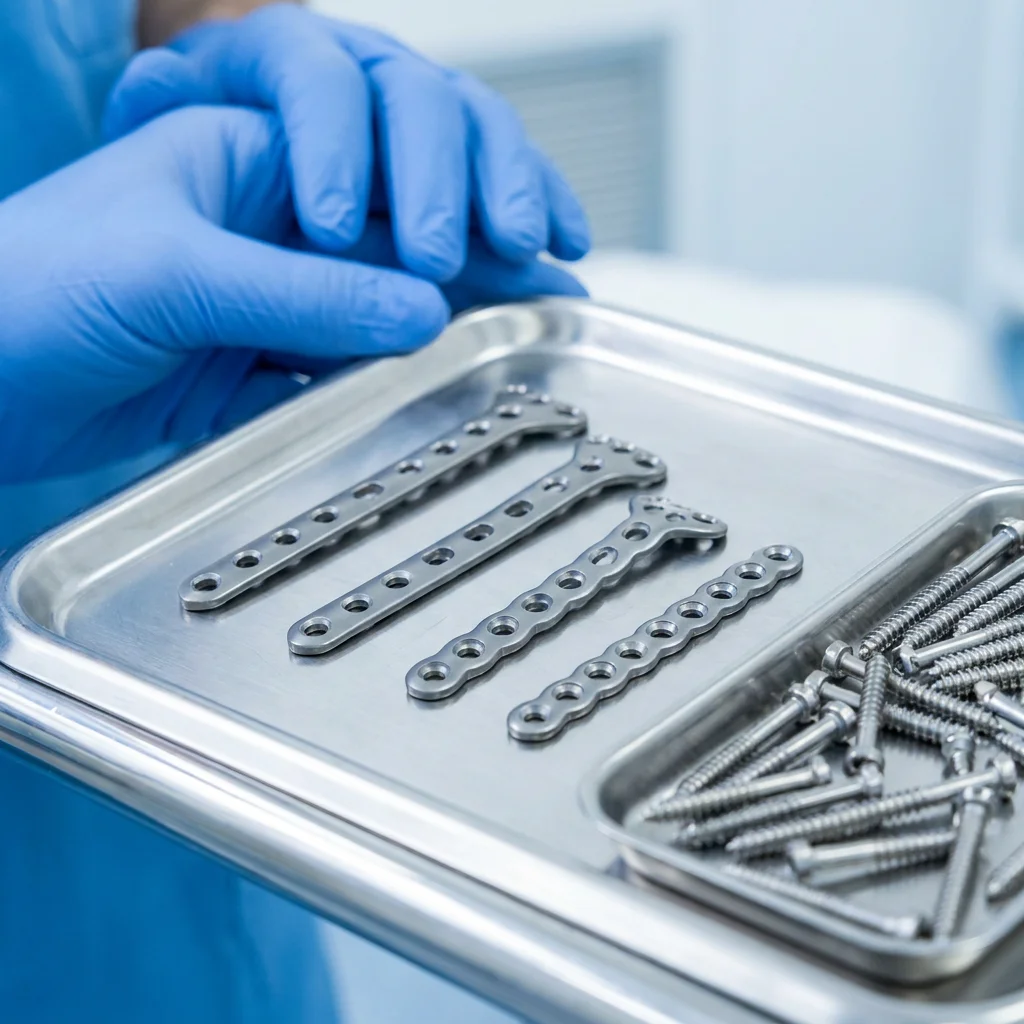
The global supply chain for advanced metallurgy in 2026 focuses heavily on precision, compliance, and material integrity. Demands in biotechnology, medical implants, deep-sea exploration, and high-temperature chemical reactions require metals engineered at the molecular level. Finding the right partners, such as reputable medical titanium manufacturers and certified raw material mills, is the first step in successful project execution.
Advanced industries are rapidly shifting away from standard commodity steels toward specialized superalloys and high-purity element formulations. This transition is driven by the need to operate under higher mechanical stresses, in more corrosive chemical solutions, and within the human body. As a result, selecting an established advanced metal supplier has become a key competitive advantage for engineering firms worldwide.
This technical guide details the mechanical and chemical parameters of three cornerstone materials shaping modern B2B manufacturing. We explore the high-strength biocompatibility of Titanium Alloy s, the unyielding caustic resistance of nickel systems, and the micro-cleanliness of surgical stainless steel. Understanding these differences allows procurement managers and design engineers to optimize performance while maintaining cost efficiency.
II. Sourcing from Medical Titanium Manufacturers: Titanium Grade 5 ELI and Grade 2
Titanium remains the premier choice for aerospace structural elements and medical implants due to its extraordinary strength-to-weight ratio. Within the healthcare sector, medical titanium manufacturers utilize highly refined grades of this element to fabricate life-saving orthopedic and cardiovascular devices. These applications demand strict compliance with international standards, including ASTM F67 for commercially pure grades and ASTM F136 for alpha-beta formulations.
Commercially Pure (CP) Titanium Grade 2 is highly valued for its moderate mechanical strength paired with excellent cold-formability and exceptional corrosion resistance. In chemical processing and saline environments, CP Grade 2 forms a stable, protective titanium oxide film that resists pitting and crevice corrosion. This self-healing passive layer makes it a preferred choice for medical equipment housings, dental components, and maritime instrumentation.
For load-bearing skeletal applications, Ti-6Al-4V Grade 5 ELI (Extra Low Interstitials) represents the gold standard of mechanical performance. By reducing interstitial elements like oxygen, nitrogen, carbon, and hydrogen, medical titanium manufacturers achieve improved fracture toughness and fatigue resistance. This material exhibits an elastic modulus closer to human bone, which minimizes stress shielding and promotes healthy osseointegration.
The processing of medical grade titanium requires specialized vacuum melting and precision extrusion technologies. Double or triple vacuum-arc remelting (VAR) is used to eliminate gaseous impurities that could compromise the physical properties of the finished product. When sourcing from an advanced metal supplier, verify that all shipments are accompanied by comprehensive Mill Test Certificates (MTC) proving precise chemical composition.
Furthermore, precision centerless grinding and polishing are applied to titanium bars to achieve tight dimensional tolerances for automated Swiss machining. This ensures that downstream manufacturing processes run smoothly, minimizing material scrap and tool wear. The integration of advanced thermal treatment cycles allows for the optimization of microstructure, yielding consistent mechanical properties across production batches.
Table 1: Mechanical and Physical Properties of Sourced Titanium Alloys
| Titanium Grade | UNS Designation | Tensile Strength (MPa) | Yield Strength 0.2% (MPa) | Elongation at Break (%) | Density (g/cm³) | Primary Application |
|---|---|---|---|---|---|---|
| Grade 1 (CP) | R50250 | 240 Min | 170 - 310 | 24 Min | 4.51 | Deep draw components, chemical vessels |
| Grade 2 (CP) | R50400 | 345 Min | 275 - 450 | 20 Min | 4.51 | Surgical mesh, pacing cases, heat exchangers |
| Grade 4 (CP) | R50700 | 550 Min | 483 - 655 | 15 Min | 4.51 | Dental implants, surgical staples, bone plates |
| Grade 5 ELI | R56401 | 860 Min | 795 Min | 10 Min | 4.43 | Orthopedic implants, hip joints, bone screws |
As detailed above, the progression from Grade 1 to Grade 5 ELI demonstrates a substantial increase in tensile and yield strength. However, this mechanical boost comes with a corresponding decrease in elongation capabilities, which makes material selection a careful trade-off. Sourcing from verified medical titanium manufacturers ensures your design team receives raw stocks tailored to exact fabrication needs.
III. Pure Nickel Alloys: Engineering Demands and Selecting a Pure Nickel Supplier
When engineering designs face exceptionally aggressive caustic environments or require high-purity electrical contacts, commercially pure nickel is unmatched. Sourcing from a reliable pure nickel supplier provides access to Nickel 200 (UNS N02200) and Nickel 201 (UNS N02201). These materials feature a nickel concentration of 99.0% or greater, giving them highly specific thermal, electrical, and mechanical attributes.
Nickel 200 is the standard industrial grade, exhibiting outstanding resistance to alkaline solutions, organic acids, and dry halogens. However, when operating temperatures exceed 315°C (600°F), Nickel 200 is susceptible to carbon precipitation, also known as graphitization. This phenomenon leads to severe embrittlement and rapid mechanical failure, rendering the alloy unsafe for high-temperature service.
To overcome this limitation, a qualified pure nickel supplier offers Nickel 201, which features a tightly controlled carbon content limited to a maximum of 0.02%. This subtle chemical alteration prevents carbon from precipitating at grain boundaries at elevated temperatures. Consequently, Nickel 201 retains its ductility and toughness up to 650°C (1200°F), making it the premier choice for caustic soda evaporators and synthetic fiber manufacturing.
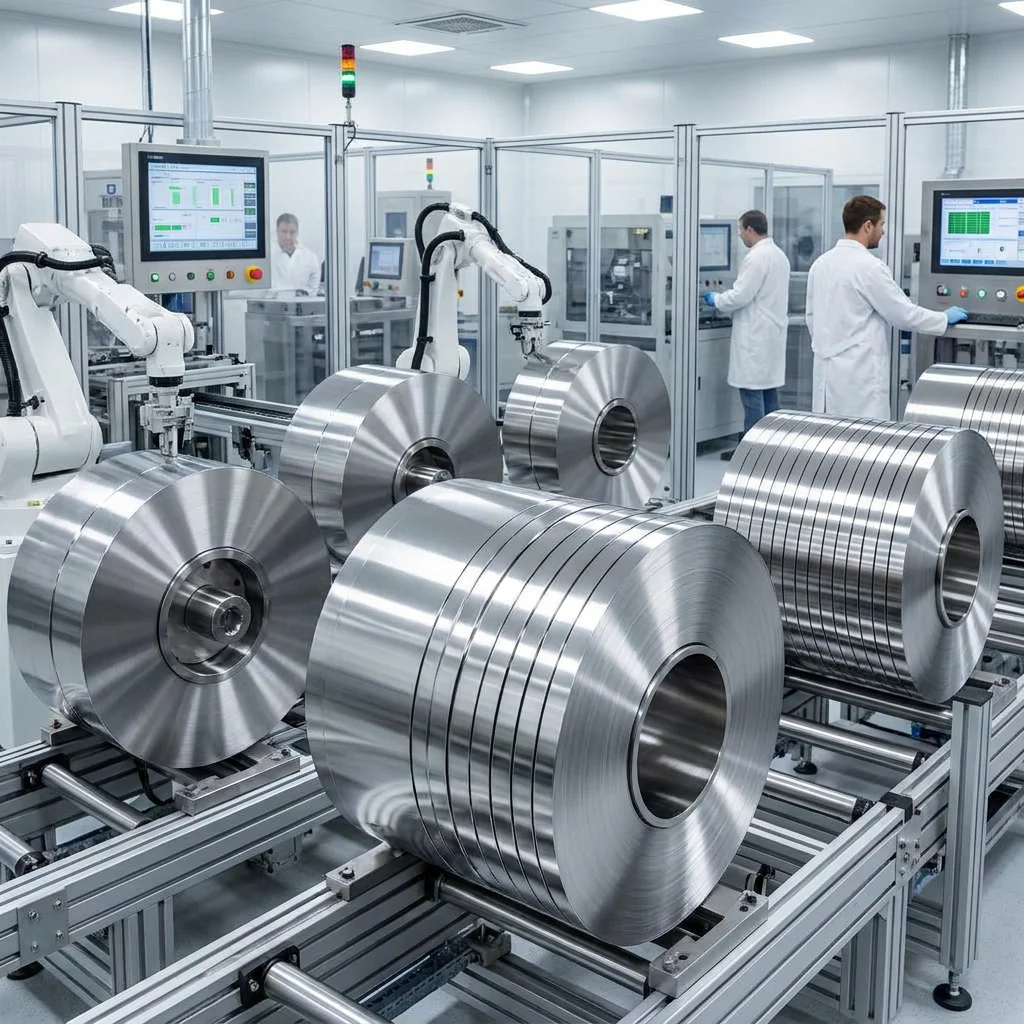
In addition to chemical resistance, Pure Nickel alloys possess excellent magnetostrictive properties and low electrical resistivity. In the microelectronics and semiconductor manufacturing sectors of 2026, pure nickel strip coils and wires are widely used for battery connections and lead frames. The material's high thermal conductivity also facilitates efficient heat dissipation in compact power modules.
Furthermore, the modern hydrogen energy sector relies heavily on high-purity nickel foils for water electrolysis and hydrogen fuel cell stacks. Working with an experienced pure nickel supplier guarantees that the foil thickness is highly uniform and free from microscopic pinholes. This extreme precision ensures stable electrical contact and maximizes the efficiency of green energy generation systems.
Table 2: Comparison of Commercially Pure Nickel 200 and Nickel 201
| Alloy Grade | UNS Number | Max Carbon Content (%) | Electrical Resistivity (µΩ·m) | Thermal Conductivity (W/m·K) | Critical Temp Limit | Primary Sourcing Advantage |
|---|---|---|---|---|---|---|
| Nickel 200 | N02200 | 0.15 Max | 0.096 | 70.2 | < 315°C (600°F) | Excellent room temperature strength, superb caustic alkali resistance |
| Nickel 201 | N02201 | 0.02 Max | 0.085 | 79.3 | Up to 650°C (1200°F) | No graphitization risk, high-temp caustic processing stability |
By contrasting these two alloys, engineers can determine the exact thermal boundary for their design. Sourcing from an established pure nickel supplier prevents accidental installation of high-carbon stock in high-heat systems. Accurate material tagging and mill-run documentation from a premium advanced metal supplier protect against catastrophic industrial failures.
IV. Medical Stainless Steel: Precision Standards for Surgical Implants and Capillary Tubing
For applications requiring high fatigue life, economical fabrication, and robust biocompatibility, surgical stainless steel is a crucial material. An experienced medical stainless steel manufacturer focuses heavily on 316L (UNS S31603) and 316LVM (UNS S31673) alloys. These austenitic steels are modified with high chromium, nickel, and molybdenum content to resist the aggressive corrosive mechanisms of human bodily fluids.
Standard industrial 316L is suitable for surgical tools and external devices. However, permanent implants require 316LVM, which stands for "Low Carbon Vacuum Melted." A certified medical stainless steel manufacturer utilizes Vacuum Arc Remelting (VAR) as a secondary refining process. This thermal treatment eliminates gaseous impurities and non-metallic inclusions, producing a micro-clean steel matrix that resists fatigue propagation.
The "L" prefix indicates a low carbon content (maximum 0.03%), which prevents chromium carbide precipitation at grain boundaries during welding or hot working. This critical chemical limit eliminates the risk of intergranular corrosion in sensitized zones. Sourcing from a reliable medical stainless steel manufacturer ensures that all implant-grade rods, sheets, and tubes meet rigorous ASTM F138 specifications.
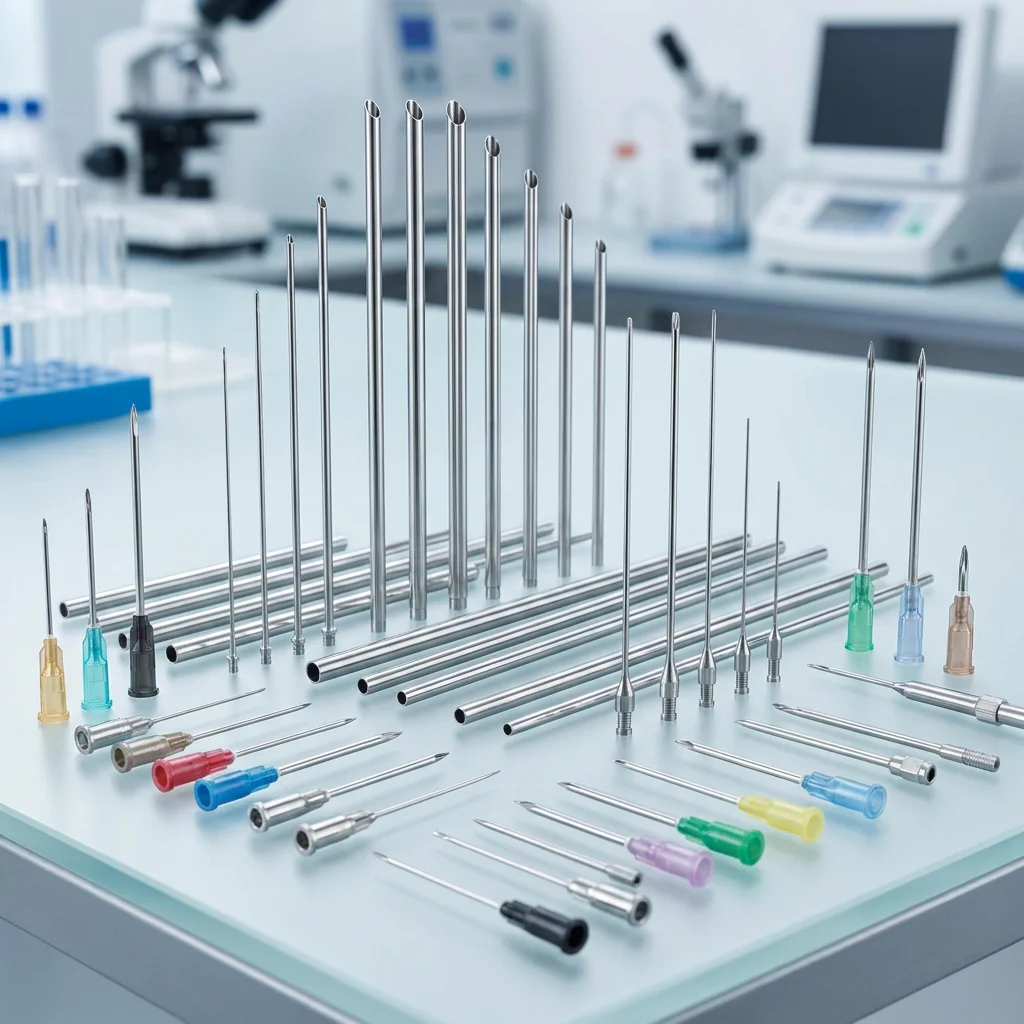
In addition to bulk implants, medical-grade stainless steel capillary tubing is widely used in high-precision catheters, endoscopy tools, and hypodermic needles. Sourcing capillaries from a dedicated advanced metal supplier ensures strict concentricity and precise wall thickness. These miniature components are drawn through diamond dies to achieve highly smooth internal surfaces, preventing blockage and contamination during fluid delivery.
Furthermore, the high mechanical strength of 316LVM allows for the manufacturing of extremely thin-walled tubing without sacrificing structural rigidity. This is essential for modern minimally invasive surgeries, where smaller device profiles lead to faster patient recovery. Cold-drawn finishes can boost the tensile strength of 316LVM to over 1000 MPa, allowing surgical instruments to retain sharp edges during prolonged procedures.
V. Multi-Material Sourcing Strategies: Designing the Ideal System
In the complex engineering projects of 2026, combining different advanced alloys is often required to achieve optimal system performance. For instance, a medical diagnostic assembly may utilize structural components made of medical grade titanium alongside ultra-fine capillary tubing produced by a premium medical stainless steel manufacturer. Managing these dual material streams requires a unified procurement strategy overseen by a competent advanced metal supplier.
When pairing titanium with stainless steel or nickel, design engineers must carefully consider galvanic compatibility. Direct metallic contact in wet, saline, or acidic environments can establish a galvanic cell, accelerating the corrosion of the less noble metal. Using non-conductive polymer isolation washers or selecting materials with close galvanic potentials can prevent premature component degradation.
Furthermore, the joining of dissimilar metals requires specialized welding technologies. Methods like laser welding and electron beam welding (EBW) allow for highly localized heat input, minimizing the formation of brittle intermetallic compounds at the joint interface. A qualified advanced metal supplier can provide custom-welded transition joints or guide your engineering team on post-weld heat treatment cycles.
For chemical reactor vessels, engineers often use a composite cladding approach to optimize cost and performance. The main structural shell can be fabricated from high-strength steel, while the inner lining uses a corrosion-resistant cladding supplied by a pure nickel supplier. This composite construction delivers the necessary chemical protection at a fraction of the cost of a solid nickel structure.
VI. Sourcing and Supply Chain Integration in 2026
Sourcing high-performance alloys in 2026 is no longer just about basic physical dimensions; it is about complete traceability and certification. Industries operating under strict regulatory oversight, such as medical and aerospace, require full mill documentation back to the original furnace heat. Partnering with a reliable advanced metal supplier ensures your supply chain is resilient against regulatory audits.
A reliable material partner maintains robust quality management systems certified to ISO 9001 and AS9100 standards. These protocols ensure that every batch of raw material undergoes rigorous testing, including ultrasonic examination and eddy current inspection. This intensive quality control detects internal micro-voids and surface cracks before the metal reaches your manufacturing floor.
Furthermore, global supply chain logistics require raw material suppliers to maintain diversified sourcing channels to mitigate geopolitical risks. Having a secure inventory of critical metals, such as pure nickel strip coils and medical titanium bars, prevents costly production shutdowns. Selecting an advanced metal supplier with local stocking programs can reduce lead times from months to days.
VII. Innovative Manufacturing Technologies for Advanced Metals
The year 2026 has brought significant advancements in the additive manufacturing (AM) of high-performance alloys. Spheroidized powders of Titanium Ti-6Al-4V ELI are now standard raw materials for Direct Metal Laser Sintering (DMLS). This technology allows medical device designers to create complex, porous bone scaffolds that were impossible to manufacture using traditional CNC machining.
Similarly, selective laser melting (SLM) is increasingly used by a medical stainless steel manufacturer to create customized surgical tools. This additive approach minimizes material waste, which is particularly beneficial given the high cost of medical-grade alloys. Additionally, laser cladding is used to deposit high-wear cobalt or nickel alloys onto structural steel components, enhancing surface durability.
In subtractive manufacturing, AI-optimized high-speed machining (HSM) toolpaths have greatly reduced the cycle times for titanium parts. Titanium's low thermal conductivity can cause heat to build up rapidly at the cutting tool interface, leading to premature tool failure. Using high-pressure coolant systems and optimized feed rates allows machine shops to maintain high dimensional precision and clean surface finishes.
Conclusion: Leading the Way in Advanced Materials
As we navigate the highly specialized industrial and clinical demands of 2026, material selection remains the foundation of engineering success. Whether you are resisting extreme ocean currents with CP titanium, managing hot caustic soda lines with pure nickel, or protecting human lives with vacuum-melted stainless steel, selecting the right alloy is essential. Aligning your procurement with premium medical titanium manufacturers and an experienced pure nickel supplier guarantees the mechanical success of your project.
At DLX Metals, we are dedicated to providing the highest quality raw materials and technical support to our global partners. By combining metallurgical expertise, state-of-the-art testing equipment, and deep supply chain integration, we help you overcome the most complex material challenges. Our team is ready to assist you in navigating the selection, design, and regulatory processes of your next engineering breakthrough.
To explore our full inventory of high-performance titanium, pure nickel, and surgical stainless steel alloys, or to receive customized material testing reports, please get in touch with our engineering team today. Contact us via the website inquiry form to discuss your specific technical specifications, ask for a detailed price quotation, or request raw material samples for your upcoming production runs.