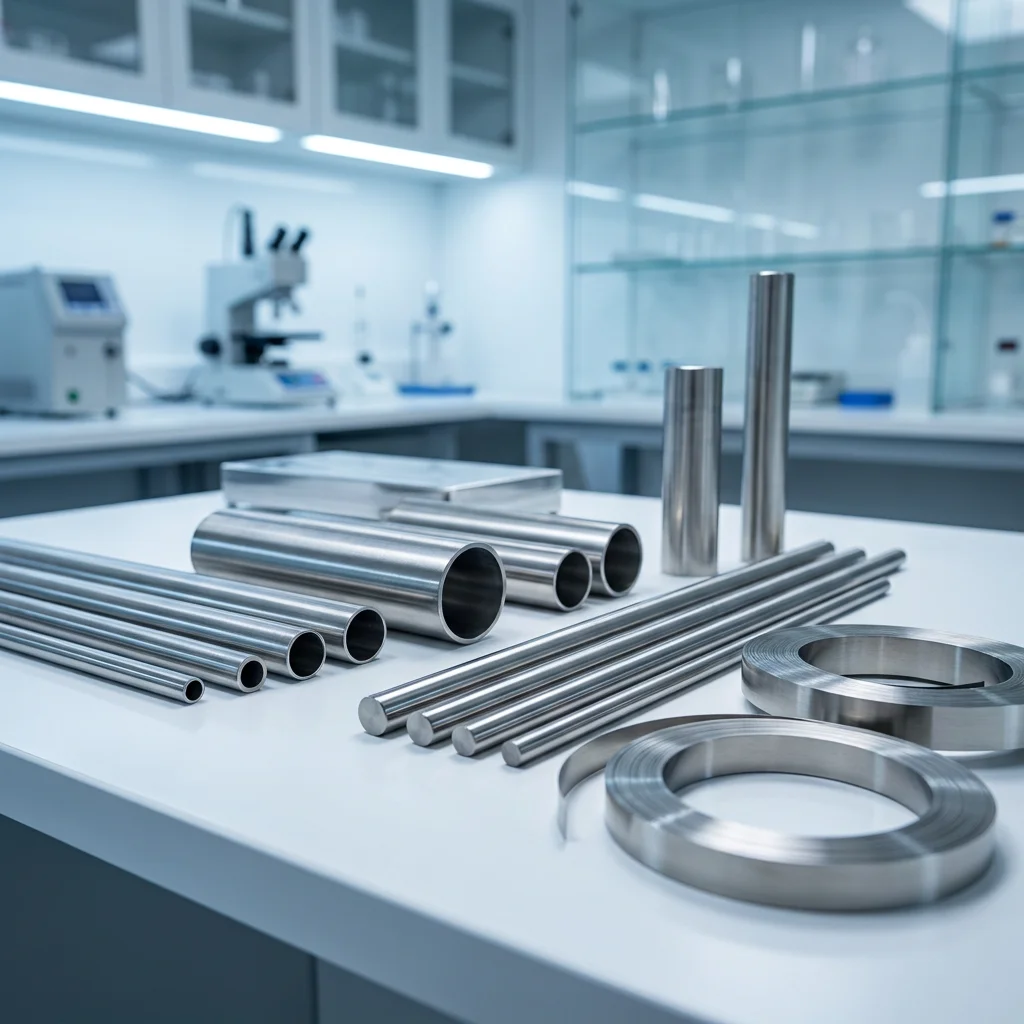
The 2026 Strategic Guide to Advanced Metallurgy: Engineering Excellence in Titanium Alloy s, Pure Nickel, and Medical-Grade Stainless Steel
Published on: June 8, 2026

In the rapidly evolving landscape of 2026 industrial engineering, the demand for high-performance materials has reached unprecedented levels. As global industries shift toward more sustainable, efficient, and extreme-environment operations, the selection of the correct metallurgical substrate is no longer just a procurement decision—it is a strategic engineering imperative. This guide explores the critical roles of Titanium series (Ti-6Al-4V, Grade 2), Pure Nickel (Ni200/201), and Medical-Grade Stainless Steel (316LVM) in shaping the future of aerospace, chemical processing, and life-saving medical technologies.
I. The Titanium Revolution: Grade 2 and Ti-6Al-4V (Grade 5)
Titanium remains the "space-age" metal of choice, but its application has expanded far beyond traditional aerospace. In 2026, we categorize titanium solutions primarily into two categories: Commercially Pure (CP) and Alpha-Beta alloys.
1. Titanium Grade 2: The Workhorse of Corrosion Resistance
Titanium Grade 2 is the most widely used form of commercially pure titanium. It offers an optimal balance of moderate strength and excellent ductility. Its primary advantage lies in its extraordinary resistance to corrosion in highly oxidizing environments, including seawater and chlorinated media. In the chemical processing industry (CPI), Grade 2 is indispensable for heat exchangers, reaction vessels, and piping systems where longevity and reliability are paramount.
Technically, Grade 2 titanium maintains a hexagonal close-packed (HCP) alpha structure. Its resistance to "pitting" and "crevice corrosion" in saline environments makes it superior to almost all grades of stainless steel in marine applications. Engineers in 2026 are increasingly specifying Grade 2 for desalination plants and offshore energy platforms due to its lifecycle cost-effectiveness, despite a higher initial capital expenditure compared to lower-cost alloys.
2. Ti-6Al-4V (Grade 5): The Pinnacle of Structural Efficiency
Ti-6Al-4V, often referred to as the "workhorse" of the titanium industry, represents approximately 50% of total titanium usage worldwide. It is an alpha-beta alloy, containing 6% aluminum and 4% vanadium. This specific composition allows the metal to be heat-treated to achieve exceptional strength-to-weight ratios.
In 2026, the aerospace sector utilizes Ti-6Al-4V for critical structural components, turbine blades, and engine parts. Its ability to withstand temperatures up to 350°C (660°F) while remaining significantly lighter than steel allows for greater fuel efficiency in next-generation aircraft. Beyond aerospace, Grade 5 is becoming a standard in high-end automotive racing and performance engineering, where every gram of weight reduction translates into measurable performance gains.
Table 1: Technical Comparison of Titanium Grade 2 and Ti-6Al-4V
| Property | Titanium Grade 2 (CP) | Titanium Ti-6Al-4V (Gr 5) |
|---|---|---|
| Density (g/cm³) | 4.51 | 4.43 |
| Tensile Strength (MPa) | 345 - 480 | 895 - 1000 |
| Yield Strength (MPa) | 275 - 410 | 825 - 910 |
| Elongation (%) | 20 - 28 | 10 - 15 |
| Elastic Modulus (GPa) | 105 | 114 |
| Primary Use Case | Chemical/Marine Corrosion | Aerospace/High-Strength Structural |
II. Pure Nickel: The Unyielding Barrier for Caustic Processing (Ni200/201)
Pure Nickel, specifically Nickel 200 (UNS N02200) and Nickel 201 (UNS N02201), represents a unique niche in metallurgy. Unlike nickel-based superalloys (like Inconel or Hastelloy), these are commercially pure (99%+) nickel materials, valued for their specific physical and electromagnetic properties.
1. Nickel 200 vs. Nickel 201: The Carbon Difference
Nickel 200 is the standard industrial grade. However, when operating at temperatures exceeding 315°C (600°F), Nickel 200 is susceptible to graphitization—a process where the carbon within the metal precipitates, leading to embrittlement and mechanical failure. To combat this, Nickel 201 was developed with a significantly lower carbon content (maximum 0.02%). This minor chemical adjustment allows Ni201 to maintain its structural integrity and ductility in high-temperature caustic environments, such as those found in caustic soda concentration and synthetic fiber production.
2. Engineering Advantages in 2026
The engineering value of Pure Nickel stems from its magnetic properties, high thermal and electrical conductivity, and its nearly total immunity to corrosion by caustic alkalis. In the semiconductor industry of 2026, Pure Nickel is used for lead frames and electronic components due to its superior conductivity and solderability. Furthermore, in the production of hydrogen fuel cells—a booming sector in the mid-2020s—Nickel 200/201 plates and foils are critical components for electrodes and current collectors.
Another vital application is in the processing of fluorine and bromine. Pure Nickel forms a protective fluoride film that prevents further degradation, a property that many high-alloy steels lack. For engineers designing equipment for the handling of food products, Pure Nickel provides a non-contaminating surface, ensuring product purity in large-scale industrial kitchens and pharmaceutical compounding units.
III. Medical-Grade Stainless Steel: The 316LVM Standard
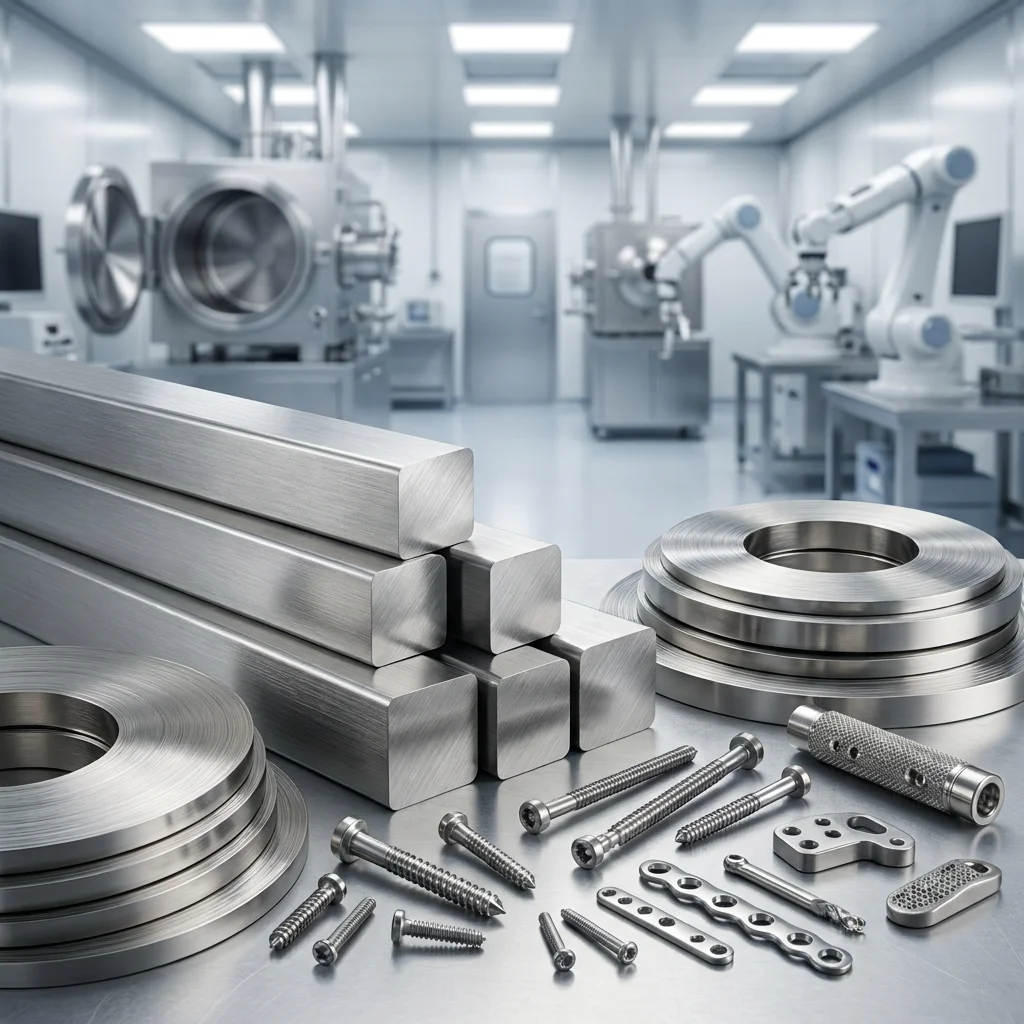
When it comes to human life and biocompatibility, standard industrial materials are insufficient. 316LVM (UNS S31673) represents the highest echelon of austenitic stainless steel, specifically engineered for permanent medical implants and high-precision surgical instruments.
1. What defines "VM"?
The "VM" in 316LVM stands for "Vacuum Melted." The steel is refined through Vacuum Arch Remelting (VAR). This secondary melting process is critical because it removes gaseous impurities and ensures an extremely high level of cleanliness. In 2026, the medical device industry demands materials with near-zero non-metallic inclusions. Large inclusions can act as stress concentrators, leading to fatigue failure or localized corrosion once the device is implanted in the hostile, saline environment of the human body.
2. Biocompatibility and Mechanical Integrity
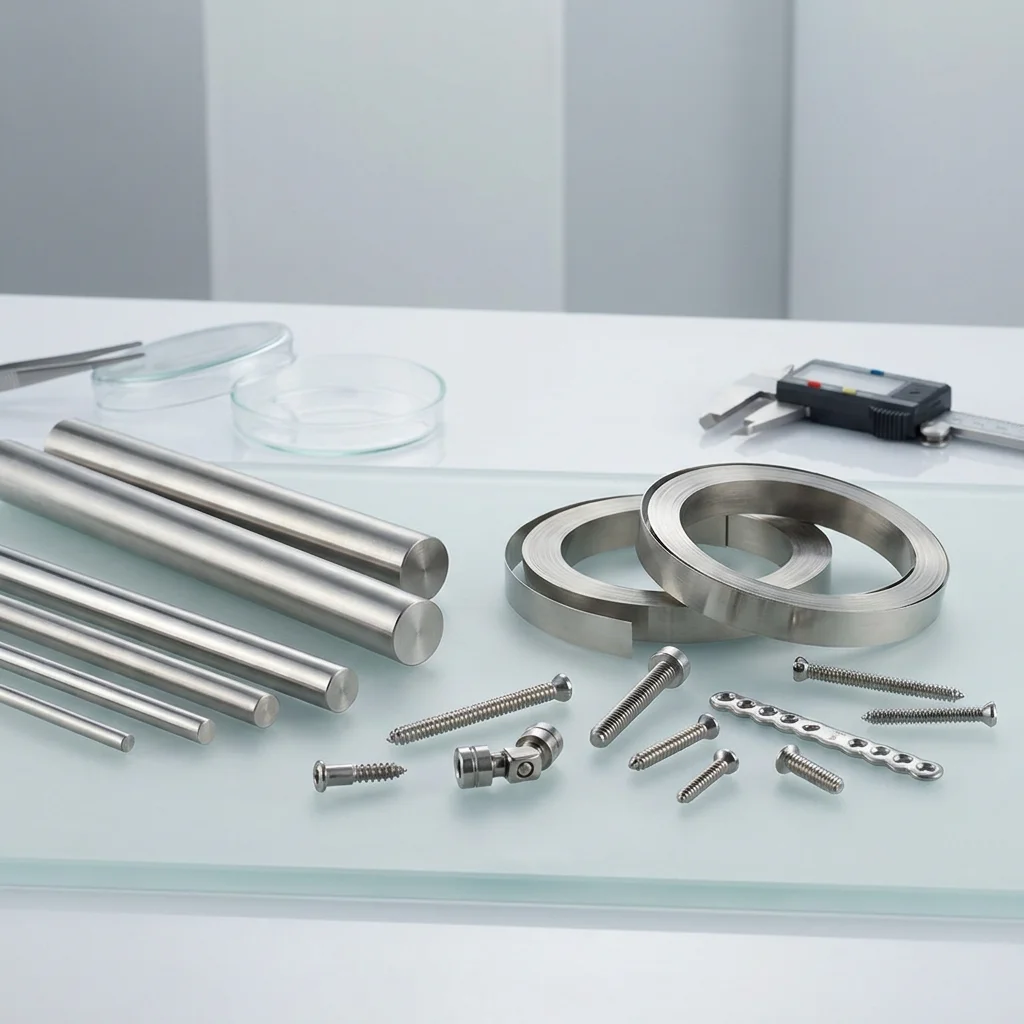
The "L" denotes low carbon, which prevents intergranular corrosion by minimizing carbide precipitation during welding or thermal processing. The addition of molybdenum (2-3%) provides essential resistance to pitting and crevice corrosion. For orthopedic applications—such as bone screws, plates, and intramedullary nails—316LVM provides the necessary combination of strength, ductility, and "toughness" to withstand the cyclic loading of human movement.
Table 2: 316LVM vs. Standard 316L Comparison
| Characteristic | Standard 316L (Industrial) | Medical 316LVM (VAR) |
|---|---|---|
| Melting Process | AOD / Electric Arc | Vacuum Arc Remelted (VAR) |
| Inclusion Content | Standard Industrial Levels | Extremely Low / Micro-clean |
| Carbon Content (%) | ≤ 0.030 | ≤ 0.030 |
| Corrosion Resistance | High | Superior (Pitting resistance) |
| Fatigue Life | Moderate | High (Critical for Implants) |
| Compliance | ASTM A240 / A276 | ASTM F138 / ISO 5832-1 |
IV. Strategic Selection: Engineering for 2026 and Beyond
Selecting between Titanium, Pure Nickel, and Medical Stainless Steel requires a deep understanding of the operating environment. In 2026, we see three primary drivers for material selection:
1. Weight vs. Cost in Aerospace
While Titanium Ti-6Al-4V is the superior material for weight-sensitive structural components, its cost can be prohibitive. Engineers must conduct a "Value Engineering" analysis. If the component is non-structural and requires high corrosion resistance (such as a galley fitting or a waste water line), Titanium Grade 2 or even a high-grade stainless steel might be the more economical choice. However, for landing gear components or engine pylons, the strength-to-weight ratio of Grade 5 remains unmatched.
2. Chemical Environment Mapping
For chemical engineers, the choice between Titanium Grade 2 and Nickel 200/201 often comes down to the pH and the specific ions present. Titanium thrives in oxidizing acids (like nitric acid) and chlorides. Conversely, Pure Nickel is the undisputed king of alkaline (basic) environments. Using titanium in a hot caustic soda environment would lead to rapid failure, whereas Pure Nickel would remain unaffected for decades. This "chemical mapping" is a fundamental skill for metallurgical consultants in 2026.
3. Human Factors and Long-term Stability
In the medical field, the choice between 316LVM and Titanium (often Grade 5 ELI - Extra Low Interstitials) is frequently debated. 316LVM is often preferred for temporary fracture fixation because it is easier to machine and significantly more cost-effective. However, for permanent joint replacements or spinal cages, Titanium is preferred due to its superior osseointegration (bone-bonding) capabilities and lower modulus of elasticity, which reduces "stress shielding" (the weakening of bone due to the metal carrying all the load).
V. Manufacturing Innovations: 3D Printing and Precision Machining
The year 2026 has seen a maturation of additive manufacturing (AM) for these high-performance metals. Titanium Ti-6Al-4V powders are now standard for Direct Metal Laser Sintering (DMLS), allowing for the creation of complex, bionic geometries that were previously impossible to machine. This reduces material waste—a critical factor given the high cost of titanium sponge.
Similarly, the precision machining of 316LVM has advanced with the integration of AI-driven toolpath optimization. This allows for the production of microscopic surgical components, such as stents and ophthalmic tools, with tolerances measured in microns. For Pure Nickel, advancements in electrochemical machining (ECM) have enabled the creation of intricate cooling channels in high-temp industrial components without introducing thermal stresses.
VI. Supply Chain Considerations: Sourcing and Compliance
Reliability in 2026 is not just about material properties; it is about traceability. For industries like aerospace and medical, every gram of metal must be backed by a Mill Test Certificate (MTC) proving compliance with standards such as ASTM F138 (for 316LVM) or AMS 4928 (for Ti-6Al-4V). At DLX Metals, we emphasize the importance of partnering with suppliers who understand these rigorous documentation requirements. A failure in documentation is as critical as a failure in the metal itself in a regulated environment.
Conclusion: Leading the Way in Advanced Metallurgy
As we navigate the complexities of 2026's industrial demands, the synergy between Titanium alloys, Pure Nickel, and Medical Stainless Steel defines the boundaries of what is possible in engineering. Whether it is resisting the corrosive bite of the ocean with Titanium Grade 2, harnessing the caustic resilience of Nickel 201, or ensuring the safety of a surgical implant with 316LVM, these materials are the silent foundation of modern civilization.
Choosing the right alloy is a balance of physics, chemistry, and economics. By understanding the granular differences between these grades—from the vacuum melting of 316LVM to the alpha-beta phase of Ti-6Al-4V—engineers can build systems that are not only more efficient but also more sustainable and durable.
How to Proceed with Your Project
Engineering excellence starts with the right material. If you are currently designing systems that require the high-performance characteristics of Titanium, Pure Nickel, or Medical-Grade Stainless Steel, technical consultation is essential to ensure optimal performance and cost-efficiency.
Contact us via the website inquiry form to discuss your specific technical requirements, request a detailed quote, or obtain material safety data sheets (MSDS) and compliance certifications for your next project. Our team of metallurgical experts is ready to assist you in selecting the perfect grade for your application.