Comprehensive Guide to Medical Grade Stainless Steel: Properties, Applications, and Sourcing 2026
SEO Title: Medical Grade Stainless Steel Guide: 316LVM & Biocompatible Alloys | DLX Metals
Meta Description: Discover the critical role of medical grade stainless steel in 2026. This 1500+ word guide covers 316LVM, surgical instruments, biocompatibility, and B2B sourcing from DLX Metals.
Introduction: The Vital Role of Medical Grade Stainless Steel in Modern Healthcare
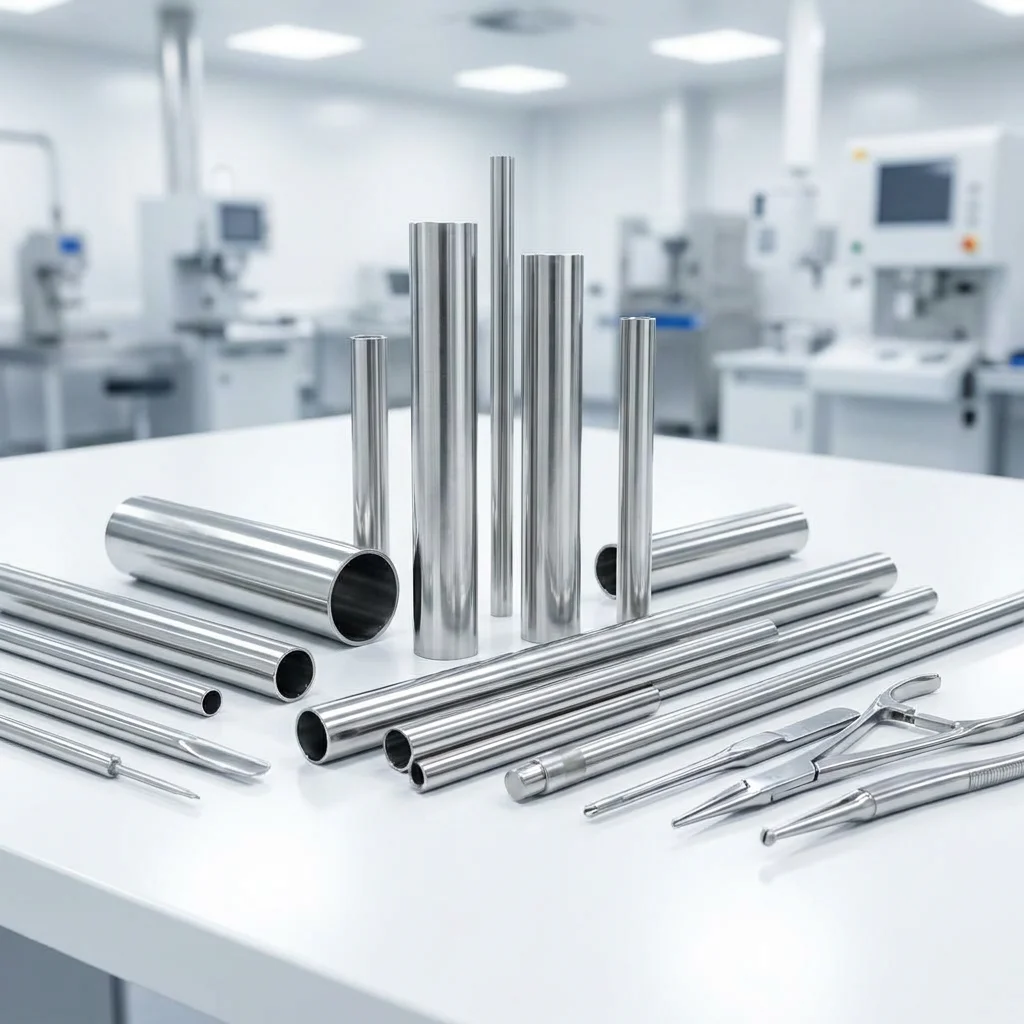
As we reach the middle of 2026, the medical device industry is experiencing an unprecedented surge in innovation. From robotic-assisted surgical systems to advanced orthopedic implants, the demand for materials that offer a perfect balance of strength, biocompatibility, and corrosion resistance has never been higher. At the forefront of this material revolution is Medical Grade Stainless Steel.
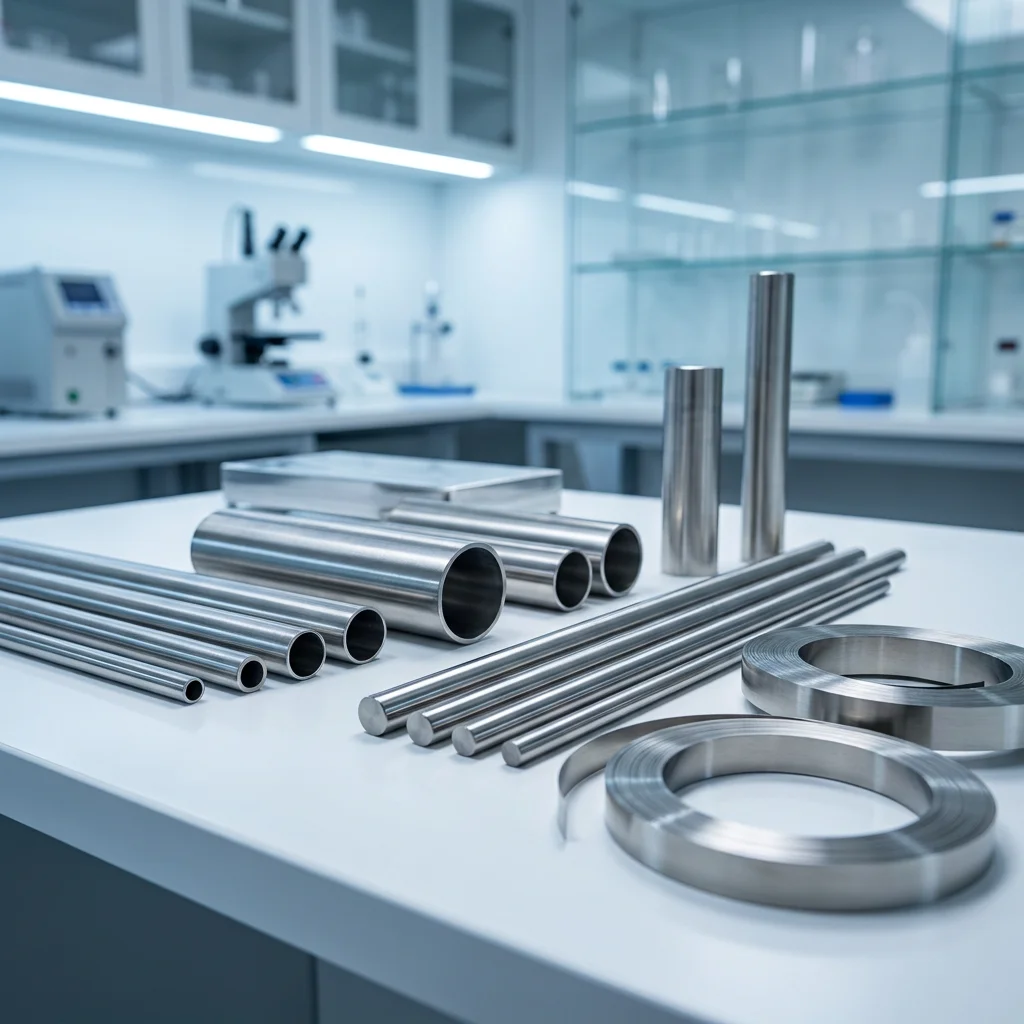
Medical grade stainless steel is not a single material but a specialized family of alloys engineered to perform within the human body or in contact with biological tissues and fluids. Unlike standard industrial steels, these alloys must adhere to stringent purity standards, ensuring they do not trigger adverse immune responses or degrade in the presence of physiological fluids. This article, published on May 14, 2026, provides an in-depth exploration of the various grades, technical specifications, and emerging trends in the medical alloy sector.
1. Defining Medical Grade Stainless Steel: Beyond Standard Alloys
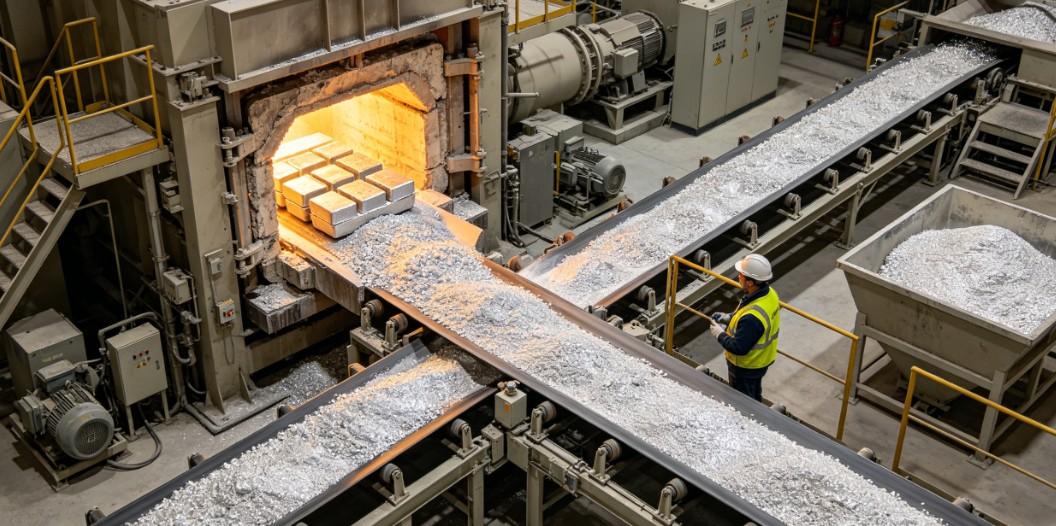
What differentiates "medical grade" from "industrial grade"? The answer lies in the micro-structure and the level of impurities. Medical grade alloys undergo specialized refining processes—such as Vacuum Induction Melting (VIM) or Electro-Slag Remelting (ESR)—to remove inclusions like sulfides and oxides that could compromise the material's fatigue life or biocompatibility.
The Importance of Biocompatibility
In the context of medical devices, biocompatibility refers to the ability of a material to perform with an appropriate host response in a specific application. Medical stainless steel must be "passive," meaning it forms a stable chromium oxide layer on its surface that prevents the release of metallic ions into the body. This is particularly critical for permanent implants where long-term safety is paramount.
Common Grades in the Medical Sector
316L (UNS S31603): The most common austenitic stainless steel for medical use. Its "L" (low carbon) designation helps prevent sensitization and intergranular corrosion during welding.
316LVM (UNS S31673): The "VM" stands for Vacuum Melted. This is the gold standard for permanent implants, offering exceptional cleanliness and fatigue resistance.
440C (UNS S44004): A high-carbon martensitic steel used for surgical cutting instruments that require extreme hardness and edge retention.
17-4PH (UNS S17400): A precipitation-hardening steel that combines high strength and hardness with good corrosion resistance, often used for surgical tool handles and structural components.
2. Technical Specifications and Grade Comparison
Understanding the chemical composition and mechanical properties is essential for engineers and procurement specialists. The following table illustrates the differences between the most prominent medical grades.
| Property | 316LVM (ASTM F138) | 440C (Martensitic) | 17-4PH (Precipitation) | Custom Grade (DLX) |
|---|---|---|---|---|
| Nickel Content (%) | 13.00 - 15.00 | < 0.75 | 3.00 - 5.00 | Customizable |
| Chromium Content (%) | 17.00 - 19.00 | 16.00 - 18.00 | 15.00 - 17.50 | 15.0 - 20.0 |
| Tensile Strength (MPa) | 490 - 1350 (Depending on Temp) | 760 - 1900 | 930 - 1310 | High Fatigue |
| Hardness (HRC) | < 25 | 58 - 62 | 30 - 45 | Variable |
| Primary Application | Permanent Implants | Scalpels, Scissors | Surgical Tooling | Specialized Devices |
3. Key Applications in the 2026 Healthcare Landscape
A. Orthopedic Implants and Trauma Fixation
The aging global population has driven a massive demand for hip and knee replacements. 316LVM is frequently used for bone screws, plates, intramedullary nails, and spinal fixation devices. Its ability to withstand the cyclic loading of human movement without fracturing makes it indispensable.
B. Cardiovascular and Stent Technology
While Nitinol is famous for self-expanding stents, 316L stainless steel remains a preferred material for balloon-expandable stents due to its excellent radiopacity and mechanical stability. Precision thin-walled tubing from manufacturers like DLX Metals is the starting point for these life-saving devices.
C. Surgical Instrumentation
Modern surgery requires precision. Martensitic steels like 440C and 420 provide the hardness needed for scalpels, bone saws, and curettes. For instruments that must undergo thousands of autoclave sterilization cycles, the corrosion resistance of 17-4PH or 316L is essential to maintain safety and functionality.
D. Dental Tools and Brackets
Orthodontic wires and brackets rely on the formability and corrosion resistance of medical grade alloys. The nickel-free stainless steel variants are also gaining traction in 2026 to cater to patients with nickel allergies.
4. Manufacturing Excellence: The DLX Metals Approach
At DLX Metals, our production of medical grade alloys is governed by a "Quality First" philosophy. We recognize that in the medical field, there is no margin for error. Our manufacturing process involves several critical stages designed to ensure material integrity.
Vacuum Melting and Refining
We utilize advanced Vacuum Induction Melting (VIM) followed by Electro-Slag Remelting (ESR). This dual-stage process effectively eliminates non-metallic inclusions and ensures a highly uniform microstructure, which is vital for the fatigue resistance of medical implants.
Precision Cold Working
To achieve the specific mechanical properties required by our clients—whether it is high-tensile wire for sutures or ultra-thin foil for electronic medical components—we employ high-precision cold rolling and drawing. Our facilities can maintain tolerances as tight as ±0.001mm on medical tubing and strips.
Surface Passivation and Cleaning
Every piece of medical stainless steel leaving our factory undergoes a rigorous passivation process. This strengthens the chromium oxide layer, ensuring maximum corrosion resistance. Furthermore, our cleaning protocols ensure that the material is free from manufacturing oils and contaminants, ready for final sterilization by the device manufacturer.
| Manufacturing Parameter | Standard Capability | High-Precision Offering |
|---|---|---|
| Tube Diameter | 0.5mm - 25mm | 0.2mm - 5mm (Thin Wall) |
| Strip Thickness | 0.05mm - 2.0mm | 0.01mm - 0.1mm (Foil) |
| Surface Roughness (Ra) | < 0.4 μm | < 0.1 μm (Electropolished) |
| Testing Protocols | Spectroscopy, Tensile, Hardness | Micro-Inclusion Analysis, Fatigue, Cytotoxicity |
5. Industry Trends in 2026: The Future of Medical Alloys
The year 2026 marks a turning point in medical metallurgy. Several key trends are reshaping how we specify and use stainless steel in healthcare.
1. Additive Manufacturing (3D Printing)
The integration of medical grade 316L and 17-4PH powders into metal 3D printing is allowing for patient-specific implants with complex lattice structures. These structures promote osseointegration (bone ingrowth), leading to faster recovery times and better long-term outcomes for patients.
2. Smart Surfaces and Antimicrobial Coatings
Researchers are developing laser-textured stainless steel surfaces that inherently repel bacteria. At DLX Metals, we are collaborating with biomedical engineers to provide substrate materials that are optimized for these advanced surface treatments, reducing the risk of hospital-acquired infections (HAIs).
3. Sustainable Medical Sourcing
The healthcare industry is increasingly focused on its environmental footprint. 2026 has seen a rise in the demand for "Green Steel"—stainless steel produced with a high percentage of recycled content and lower carbon emissions during the refining process. DLX Metals is proud to lead the way in sustainable B2B sourcing for global medical device companies.
4. Digital Quality Traceability
In 2026, manual certificates are being replaced by blockchain-enabled digital material passports. Every coil or rod of medical steel from DLX Metals carries a unique digital ID, allowing manufacturers to trace the material's entire history, from the raw melt to the final shipment, ensuring compliance with global regulations like the EU Medical Device Regulation (MDR).
6. Addressing Customer Pain Points in Medical Alloy Sourcing
Sourcing materials for medical applications is fraught with challenges. Here is how DLX Metals provides solutions for the most common B2B procurement issues.
| Customer Pain Point | DLX Metals Solution |
|---|---|
| Regulatory Non-Compliance: Fear of material rejection during FDA or MDR audits. | Full Documentation: We provide comprehensive MTCs (Mill Test Certificates) and support for regulatory filings, ensuring our materials meet or exceed ASTM and ISO standards. |
| Material Purity Issues: Inclusions causing failure in high-fatigue implant applications. | VIM/ESR Refining: Our high-purity melting processes minimize inclusions, providing the cleanest steel possible for critical life-supporting devices. |
| Inconsistent Dimensions: Variations in wire or tube diameter affecting automated assembly lines. | Laser-Monitored Production: We use real-time laser measurement systems during the drawing and rolling processes to ensure absolute dimensional consistency. |
| Long Lead Times for Specialized Grades: Delays in R&D cycles due to material unavailability. | Flexible Batch Sizes: We maintain a stock of standard medical grades and offer small-batch production for specialized R&D requirements, accelerating your time-to-market. |
7. Frequently Asked Questions (FAQ)
Q1: Why is 316LVM preferred over standard 316L for implants?
316LVM is vacuum-melted, which results in a significantly cleaner material with fewer non-metallic inclusions. This cleanliness is crucial for preventing fatigue failure and ensuring long-term biocompatibility in permanent implants.
Q2: Can medical grade stainless steel be used in MRI environments?
Austenitic grades like 316L and 316LVM are generally non-magnetic in the annealed condition. However, cold working can induce a slight magnetic response. For MRI-critical applications, careful material selection and processing are required to ensure safety.
Q3: What standards govern medical grade stainless steel?
The most widely recognized standards are ASTM F138 and ISO 5832-1 for 316LVM, and ASTM F899 for stainless steel used in surgical instruments.
Q4: Does DLX Metals provide custom alloy compositions?
Yes, we have the capability to adjust chemical compositions within the permitted ranges of international standards to optimize the material for specific mechanical or biological requirements.
Q5: How do you ensure the surface quality of medical strips?
We use bright annealing in a controlled hydrogen atmosphere to prevent oxidation, followed by precision leveling and cleaning to ensure a defect-free surface finish.
Conclusion: Partnering for a Healthier Future
The choice of material is the foundation of any successful medical device. As technology advances toward 2027 and beyond, the role of Medical Grade Stainless Steel as a reliable, biocompatible, and high-performance material remains undisputed. Whether you are developing the next generation of orthopedic screws or ultra-fine surgical needles, the quality of your alloy is paramount.
DLX Metals is committed to being more than just a supplier; we are your partner in medical innovation. By combining deep metallurgical expertise with state-of-the-art manufacturing and a commitment to global quality standards, we empower medical device manufacturers to save lives and improve patient outcomes. Our dedication to purity, precision, and performance ensures that your products stand the test of time and the rigors of the human body.
For more information on our range of medical grade alloys or to request a technical consultation for your next project, please contact us via the website inquiry form. Our team of specialists is ready to assist you in selecting the ideal material for your mission-critical applications.
Published by the Engineering Department at DLX Metals.
Date: May 14, 2026
Copyright © 2026 DLX Metals. All Rights Reserved.