Introduction: The Indispensable Role of Pure Nickel in the 2026 Industrial Landscape
As we navigate through 2026, the global industrial sector is undergoing a profound transformation driven by the twin engines of the "Green Transition" and "High-Performance Materials Engineering." At the heart of this revolution lies a seemingly simple yet technologically sophisticated metal: Pure Nickel. Specifically, the commercially pure grades Ni200 (UNS N02200) and Ni201 (UNS N02201) have emerged as the standard-bearers for reliability in extreme environments.
From the microscopic world of advanced battery tabs in Electric Vehicles (EVs) to the massive pressure vessels in caustic soda production plants, Pure Nickel provides a unique combination of electrical conductivity, thermal stability, and unparalleled corrosion resistance. In this comprehensive guide, we delve into the technical nuances of Ni200 and Ni201, exploring why these materials are critical for the energy storage and chemical processing sectors of tomorrow.
1. Material Analysis: Understanding Ni200 and Ni201
What is Commercially Pure Nickel?
Commercially pure nickel typically refers to nickel alloys containing at least 99% nickel. Unlike complex superalloys designed for extreme heat or high-stress aerospace applications, Ni200 and Ni201 prioritize the inherent properties of the nickel element itself.
Ni200 (UNS N02200)
Nickel 200 is the standard commercially pure grade (99.6%). It is known for:
Excellent resistance to many corrosive media, particularly reducing environments.
High thermal and electrical conductivity.
Good ductility and low work-hardening rate.
Magnetic and magnetostrictive properties.
Ni201 (UNS N02201)
Nickel 201 is the low-carbon version of Ni200. The primary difference lies in the carbon content—Ni200 allows up to 0.15% carbon, while Ni201 is restricted to a maximum of 0.02%.
Why is this important?
When exposed to temperatures above 600°F (315°C) for extended periods, the carbon in Ni200 can precipitate as graphitic carbon at the grain boundaries, leading to severe embrittlement (a phenomenon known as "graphitization"). Therefore, for any application exceeding 315°C, Ni201 is the mandatory choice to ensure structural integrity.
Key Properties Comparison
| Property | Ni200 (UNS N02200) | Ni201 (UNS N02201) |
|---|---|---|
| Purity (Ni + Co) | ≥ 99.0% | ≥ 99.0% |
| Max Carbon Content | 0.15% | 0.02% |
| Density | 8.89 g/cm³ | 8.89 g/cm³ |
| Melting Point | 1435-1446 °C | 1435-1446 °C |
| Thermal Conductivity | 70.2 W/m·K (at 20°C) | 79.3 W/m·K (at 20°C) |
| Electrical Resistivity | 9.5 μΩ·cm | 8.5 μΩ·cm |
2. Industrial Applications: Powering the Future
A. Energy Storage Systems (ESS) and Battery Technology
In 2026, the demand for high-capacity energy storage has never been higher. Pure nickel plays a critical role in the architecture of modern battery packs:
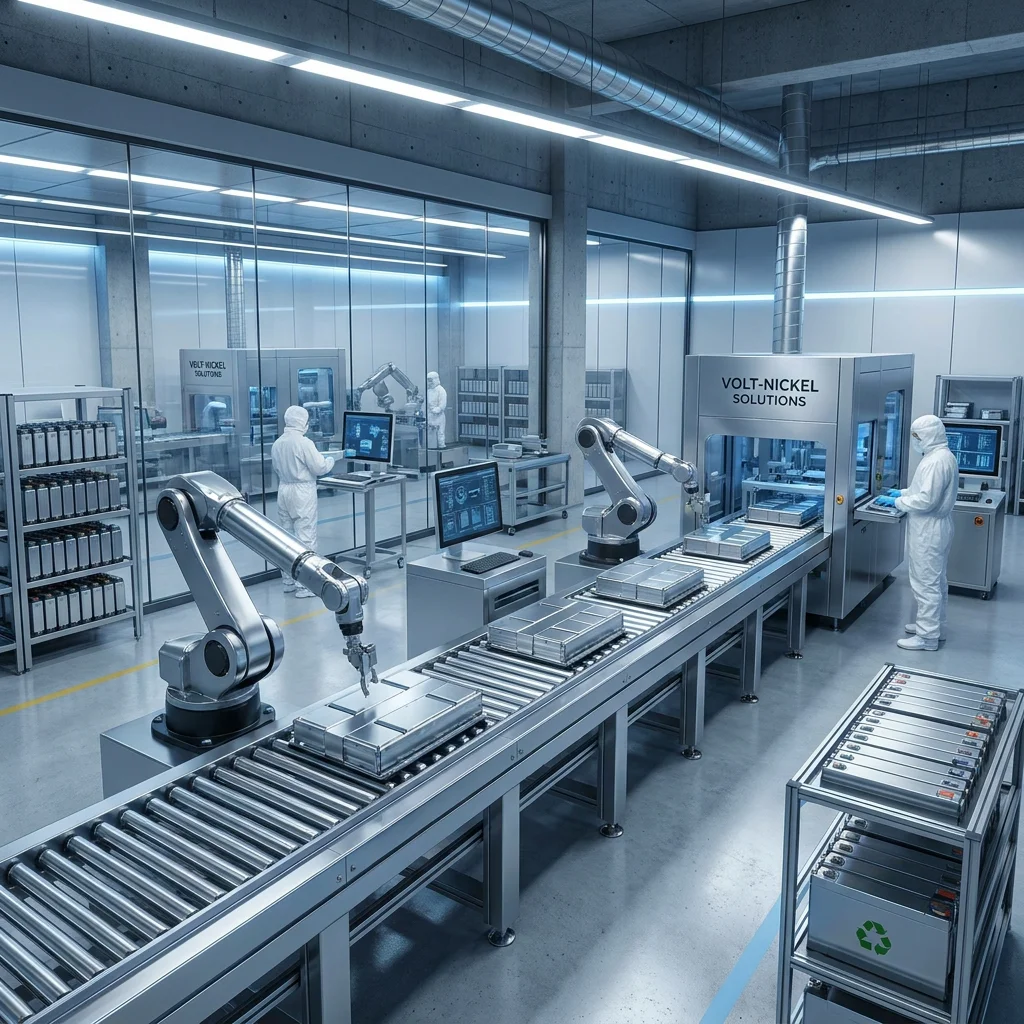
Battery Interconnects and Tabs: Because of its low electrical resistance and excellent weldability (specifically for ultrasonic and laser welding), nickel strip (Ni200) is the preferred material for connecting individual battery cells (such as 18650 or 21700 cells) into large-scale modules.
Electric Vehicles (EVs): High-purity nickel ensures minimal heat generation during fast-charging and high-discharge cycles, enhancing both the safety and efficiency of the vehicle's battery management system (BMS).
Grid-Scale Storage: As renewable energy sources like wind and solar require massive buffering capacities, pure nickel components in flow batteries and nickel-hydrogen cells provide the longevity required for infrastructure-grade equipment.
B. Chemical Processing and Caustic Handling
The chemical industry relies on Ni200/201 for its resistance to "difficult" chemicals:
Caustic Soda Production: Pure nickel is virtually immune to corrosion by caustic alkalis (sodium hydroxide, potassium hydroxide) at all concentrations and temperatures up to the melting point. It is used in evaporators, cooling coils, and storage tanks.
Fluorine and Halogens: Nickel 200/201 exhibits excellent resistance to dry fluorine, chlorine, and hydrogen chloride at elevated temperatures, making it essential for fluorine gas production and organic chlorination processes.
Synthetic Fibers and Food Processing: In applications where product purity is paramount, nickel’s low corrosion rate prevents metallic contamination, ensuring the high quality of pharmaceuticals, food products, and synthetic fibers like viscose rayon.
C. Aerospace and Electronics
Transducers: The magnetostrictive properties of Ni200 are utilized in ultrasonic devices and echo-sounding equipment.
Vacuum Tube Components: Its low vapor pressure and high Curie temperature make it ideal for internal components in high-vacuum electronics.
3. Parameter Tables: Technical Specifications
Table 3.1: Chemical Composition (%)
| Element | Ni200 (UNS N02200) | Ni201 (UNS N02201) |
|---|---|---|
| Nickel (+ Cobalt) | 99.0 min | 99.0 min |
| Copper (Cu) | 0.25 max | 0.25 max |
| Iron (Fe) | 0.40 max | 0.40 max |
| Manganese (Mn) | 0.35 max | 0.35 max |
| Carbon (C) | 0.15 max | 0.02 max |
| Silicon (Si) | 0.35 max | 0.35 max |
| Sulfur (S) | 0.01 max | 0.01 max |
Table 3.2: Typical Mechanical Properties (Annealed)
| Property | Ni200 | Ni201 |
|---|---|---|
| Tensile Strength (MPa) | 462 | 403 |
| Yield Strength (0.2% Offset, MPa) | 148 | 103 |
| Elongation (%) | 45 | 50 |
| Hardness (Rockwell B) | 45-55 | 40-50 |
4. Industry Trends 2026: The New Frontiers of Nickel
As we analyze the market in 2026, several key trends are shaping the future of Pure Nickel:
1. The "Ultra-High Purity" Requirement
With the advancement of solid-state batteries and high-precision electronics, industries are moving beyond the standard 99.6% purity. DLX Metals has observed an increasing demand for "Four-Nines" (99.99%) nickel in specialized research and high-end semiconductor applications.
2. Additive Manufacturing (3D Printing)
Nickel powder for metal 3D printing is becoming a staple in chemical plant maintenance. Complex heat exchanger geometries that were previously impossible to manufacture are now being printed using pure nickel to optimize thermal management in corrosive environments.
3. Supply Chain Circularity
In 2026, the "Closed-Loop" supply chain is no longer a buzzword but a requirement. Leading exporters like DLX Metals are increasingly involved in nickel recycling programs, ensuring that battery scrap and industrial waste are refined back into high-purity Ni200/201 products, reducing the environmental footprint of the chemical industry.
4. Digital Twins and Material Tracking
B2B buyers now expect full traceability. Every coil of nickel strip from DLX Metals comes with a digital certificate of analysis (COA) that can be integrated into the customer’s ERP system, allowing for real-time monitoring of material performance in the field.
5. Customer Pain Points vs. DLX Metals Solutions
| Customer Pain Point | DLX Metals Solution |
|---|---|
| Purity Inconsistency: Batch-to-batch variations affecting weldability in battery production. | Strict Quality Control: Every batch undergoes rigorous spectroscopic analysis and mechanical testing in our ISO-certified lab to ensure 99.6%+ purity. |
| Surface Defects: Scratches or oxidation on nickel strips causing high rejection rates in precision stamping. | Superior Surface Finish: We utilize advanced bright annealing and precision cold-rolling techniques to provide a mirror-like, defect-free surface. |
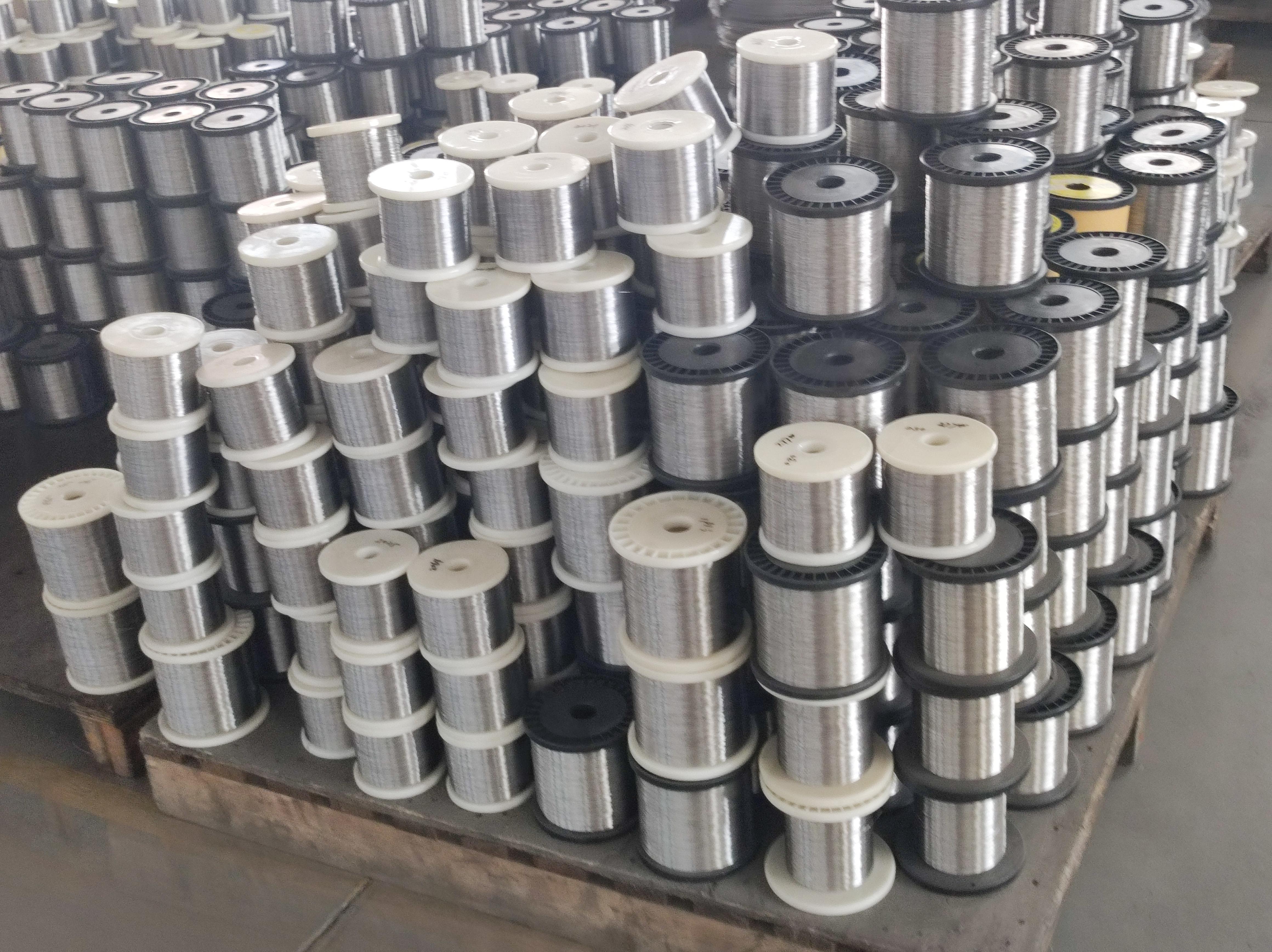
| Long Lead Times: Delivery delays halting high-volume EV production lines. | Strategic Stockholding: As a leading Chinese exporter, we maintain a robust inventory of standard sizes (strip, plate, wire) to enable rapid global shipping. |
| Technical Support Gap: Uncertainty whether to use Ni200 or Ni201 for a specific thermal process. | Expert Engineering Team: Our metallurgical experts provide complimentary consulting to help you select the most cost-effective grade for your operating parameters. |
| Regulatory Compliance: Difficulty in meeting ESG and REACH/RoHS standards for international markets. | Full Compliance & Traceability: Our manufacturing processes adhere to the highest international environmental and safety standards, with full documentation provided. |
6. FAQ Module: Frequently Asked Questions
Q1: Can I use Ni200 for a reactor operating at 400°C?
A: No. At 400°C (approx. 750°F), Ni200 is susceptible to graphitization, which causes it to lose its ductility and become brittle. You must use Ni201 for any application operating continuously above 315°C (600°F).
Q2: Is Nickel 200/201 magnetic?
A: Yes, both grades are strongly ferromagnetic at room temperature. Their Curie temperature is approximately 360°C (680°F).
Q3: Why is Nickel strip often used instead of Copper for battery tabs?
A: While copper has better conductivity, Nickel offers a better balance of conductivity and resistance to corrosion/oxidation. More importantly, nickel is much easier to weld (especially to steel casings) and does not degrade as quickly in the electrolyte environment found inside battery modules.
Q4: How does DLX Metals ensure the thickness tolerance of nickel strips?
A: We use high-precision AGC (Automatic Gauge Control) rolling mills. For thin battery strips, we can maintain tolerances as tight as ±0.002mm, ensuring consistent performance in automated assembly lines.
Q5: What forms does DLX Metals supply Ni200/201 in?
A: We provide a full range of semi-finished products, including foils, strips, sheets, plates, rods, wires, and seamless pipes. We also offer custom cutting and slitting services to meet specific dimensional requirements.
Q6: Does Ni200 resist sulfuric acid?
A: Ni200 has moderate resistance to sulfuric acid at low temperatures and concentrations. However, it is not recommended for high concentrations or boiling sulfuric acid. For those environments, specialized nickel-molybdenum or nickel-chromium-molybdenum alloys (like Hastelloy) are preferred.
7. Conclusion: Partnering with DLX Metals
The success of your energy storage or chemical processing project depends on the reliability of your materials. As global industries accelerate toward a more efficient and sustainable future, the role of Pure Nickel Ni200 and Ni201 remains foundational.
DLX Metals stands as a leading Chinese exporter and manufacturer of high-performance nickel alloys. By combining state-of-the-art production technology with a deep understanding of global B2B requirements, we deliver materials that empower innovation. Whether you are building the next generation of EV battery packs or upgrading a critical chemical plant, DLX Metals provides the purity, precision, and partnership you need to succeed.
Contact us today for a technical consultation or a competitive quote on your Ni200/Ni201 requirements.
Written by the Technical Content Team at DLX Metals.
© 2026 DLX Metals. All Rights Reserved.