1. Introduction: The Era of Precision Engineering
In the rapidly evolving landscapes of aerospace engineering and the burgeoning hydrogen economy, the demand for materials that can withstand extreme environments while maintaining absolute dimensional stability has never been higher. As we move into 2026, the intersection of zero-emission aviation and large-scale hydrogen electrolyzers is creating a unique set of metallurgical challenges.
Standard alloys often fail when subjected to the cryogenic temperatures of liquid hydrogen or the intense thermal cycling of aerospace components. This is where Precision Alloys—specifically Invar 36, Kovar, and Platinum-Iridium (Pt-Ir)—become indispensable. These materials are not just components; they are the enablers of next-generation technology.
DLX Metal, a leading Chinese exporter of high-performance alloys, provides the critical material foundations required for these industries. This article explores the technical nuances of these alloys, their strategic applications, and the trends shaping their future in 2026.
2. Material Analysis: Engineering at the Atomic Level
2.1 Invar 36 (FeNi36): The Champion of Thermal Stability
Invar 36, also known as Nilo 36 or UNS K93600, is a nickel-iron alloy containing 36% nickel. Its name is derived from the word "invariable," referring to its lack of expansion or contraction with temperature changes.
The Invar Effect: The unique property of Invar 36 lies in its "Invar Effect"—a phenomenon where the spontaneous volume magnetostriction compensates for the normal thermal expansion of the lattice.
Key Properties: It maintains nearly constant dimensions from cryogenic temperatures (-250°C) up to approximately 200°C. It is also tough, ductile, and possesses good weldability.
2.2 Kovar (ASTM F15): The Master of Hermetic Sealing
Kovar is a nickel-cobalt-iron alloy (29% Ni, 17% Co, and 54% Fe) designed to have a thermal expansion coefficient that matches that of borosilicate glass and alumina ceramics.
Thermal Matching: The critical advantage of Kovar is its ability to create a "matched seal." When glass or ceramic is bonded to Kovar, the two materials expand and contract at the same rate during thermal cycling, preventing cracks or vacuum leaks.
Key Properties: Excellent stability across a wide temperature range, good machining characteristics, and high resistance to thermal shock.
2.3 Platinum-Iridium (Pt-Ir): The Ultimate in Corrosion Resistance
Platinum-Iridium alloys (typically Pt90/Ir10 or Pt80/Ir20) combine the nobility of platinum with the hardness and strength of iridium.
Extreme Durability: These alloys are among the most corrosion-resistant materials known to man. They are virtually inert to most acids and maintain their mechanical integrity at extreme temperatures.
Key Properties: High melting point, exceptional electrical conductivity, and superior biocompatibility (critical for aerospace sensors and medical-grade hydrogen sensors).
3. Industrial Applications: Shaping the Future
3.1 Aerospace: Precision in the Stratosphere
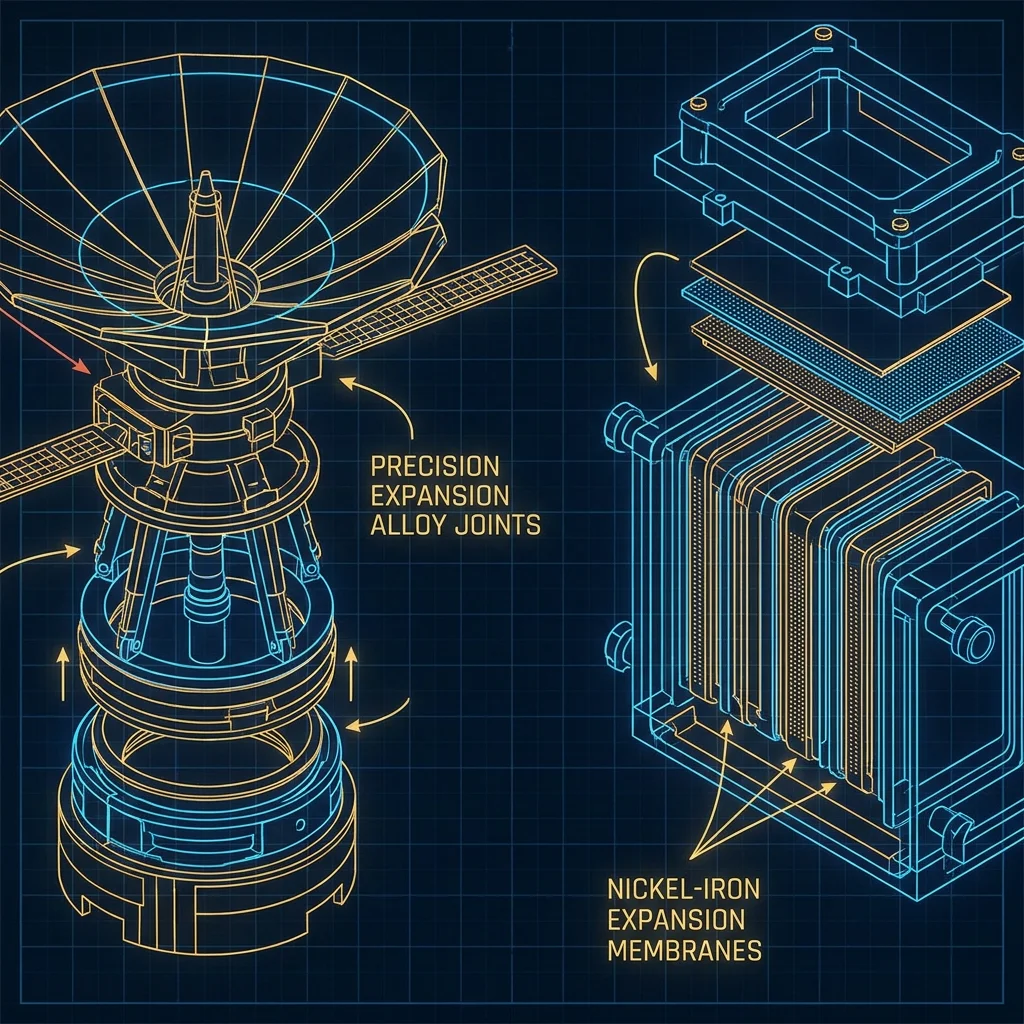
In aerospace, every micron and every gram counts. The stability of Invar 36 and Kovar is vital for the safety and performance of modern aircraft and spacecraft.
Composite Tooling (Invar 36): Large-scale composite parts for the Boeing 787 or Airbus A350 are cured in molds. Because composite materials have low expansion, the molds must also have low expansion to ensure the part doesn't warp during cooling. Invar 36 is the industry standard for these molds.
Satellite Optical Systems: Telescopes and satellite cameras require absolute focus. Invar 36 provides the structural frame that stays stable despite the massive temperature swings of space.
Electronic Packaging (Kovar): Sensitive aerospace electronics must be hermetically sealed to prevent moisture ingress or gas leakage at high altitudes. Kovar frames and lids provide the reliable glass-to-metal seals needed for sensors and flight control computers.
3.2 Hydrogen Technology: Powering the Green Transition
Hydrogen is the smallest molecule, and it is notoriously difficult to contain and manage. Precision alloys play a dual role here: structural stability and electrochemical efficiency.
Liquid Hydrogen (LH2) Storage: Invar 36’s cryogenic stability makes it ideal for the internal piping and valves of liquid hydrogen storage systems. It prevents "thermal stress fatigue" that would cause standard stainless steel to crack over time.
Proton Exchange Membrane (PEM) Electrolyzers (Pt-Ir): Hydrogen production requires catalysts. Platinum-Iridium alloys are used as electrode coatings or catalysts in electrolyzers to facilitate the splitting of water into hydrogen and oxygen. Their corrosion resistance ensures a long lifespan in acidic environments.
Hydrogen Sensors: To ensure safety, hydrogen leak detectors utilize Pt-Ir catalysts to trigger electrochemical reactions, providing high sensitivity even in harsh industrial environments.
4. Parameter Tables: Technical Specifications
Table 1: Chemical Composition (Nominal %)
| Alloy | Nickel (Ni) | Iron (Fe) | Cobalt (Co) | Iridium (Ir) | Platinum (Pt) | Other |
|---|---|---|---|---|---|---|
| Invar 36 | 36.0 | Balance | - | - | - | Mn, Si, C |
| Kovar | 29.0 | Balance | 17.0 | - | - | Mn, Si, C |
| Pt90/Ir10 | - | - | - | 10.0 | 90.0 | - |
| Pt80/Ir20 | - | - | - | 20.0 | 80.0 | - |
Table 2: Physical & Mechanical Properties
| Property | Invar 36 | Kovar | Pt90/Ir10 |
|---|---|---|---|
| Density (g/cm³) | 8.11 | 8.36 | 21.56 |
| Melting Point (°C) | 1430 | 1450 | 1780 - 1800 |
| Coeff. of Expansion (20-100°C) | 1.2 x 10⁻⁶/K | 5.1 x 10⁻⁶/K | 8.7 x 10⁻⁶/K |
| Tensile Strength (MPa) | 490 | 520 | 380 (Annealed) |
| Thermal Conductivity (W/m·K) | 10.1 | 17.3 | 31.0 |
5. Industry Trends 2026: The Path to "Net Zero"
As we look toward the remainder of 2026, several key trends are driving the precision alloy market:
Hydrogen-Powered Aviation: Major aerospace players are testing liquid hydrogen combustion and fuel cell aircraft. This shift is driving a massive spike in demand for Invar 36 for LH2 fuel systems and Pt-Ir for high-performance fuel cell components.
Additive Manufacturing (3D Printing): The ability to 3D print Invar 36 and Kovar is revolutionizing aerospace design. Complex, lightweight structures with zero thermal expansion are now possible, reducing fuel consumption and increasing satellite lifespan.
Global Supply Chain Resilience: After the disruptions of previous years, 2026 sees a trend toward "China + 1" sourcing strategies, but with a renewed focus on high-quality Chinese exporters like DLX Metal who can meet AS9100 and ISO 9001 standards.
Digitization of Material Science: AI-driven alloy development is helping manufacturers like DLX Metal optimize the microstructures of Kovar and Invar to achieve even lower expansion rates and better fatigue resistance.
6. Customer Pain Points vs. DLX Metal Solutions
| Customer Pain Point | DLX Metal Solution |
|---|---|
| Material Instability: Slight deviations in Ni/Fe ratio lead to inconsistent thermal expansion. | Ultra-Precise Melt Control: We use VIM (Vacuum Induction Melting) and ESR (Electroslag Remelting) to ensure chemical homogeneity. |
| Long Lead Times: Aerospace projects are often delayed by 6-12 month material lead times. | Stocking & Agile Production: We maintain a strategic inventory of Invar 36 and Kovar plates/rods and offer 30-45 day production cycles. |
| Certification Hurdles: Difficulty in verifying Chinese material against international standards (ASTM, AMS). | Full Traceability: Every shipment includes detailed MTCs (Material Test Reports) and third-party verification (SGS/TUV) upon request. |
| Machinability Issues: High-nickel alloys can be difficult to machine, leading to tool wear and part deformation. | Optimized Heat Treatment: Our proprietary annealing processes improve grain structure, making the materials easier to machine while maintaining stability. |
7. FAQ Module
Q: Can Invar 36 be used in high-temperature environments?
A: Invar 36 is designed for stability up to 200°C. Beyond its Curie point (approx. 280°C), it begins to expand like normal steel. For higher temperatures, Super-Invar or other specialized alloys may be required.
Q: Why is Kovar preferred over Invar for glass-to-metal seals?
A: While Invar has lower expansion, Kovar's expansion curve perfectly matches the nonlinear expansion curve of borosilicate glass. This ensures a stress-free bond throughout the cooling process from molten glass temperatures.
Q: Is Platinum-Iridium compatible with liquid hydrogen?
A: Yes. Pt-Ir is exceptionally stable in cryogenic hydrogen environments and is often used in sensitive instrumentation within LH2 tanks.
Q: Does DLX Metal provide custom dimensions?
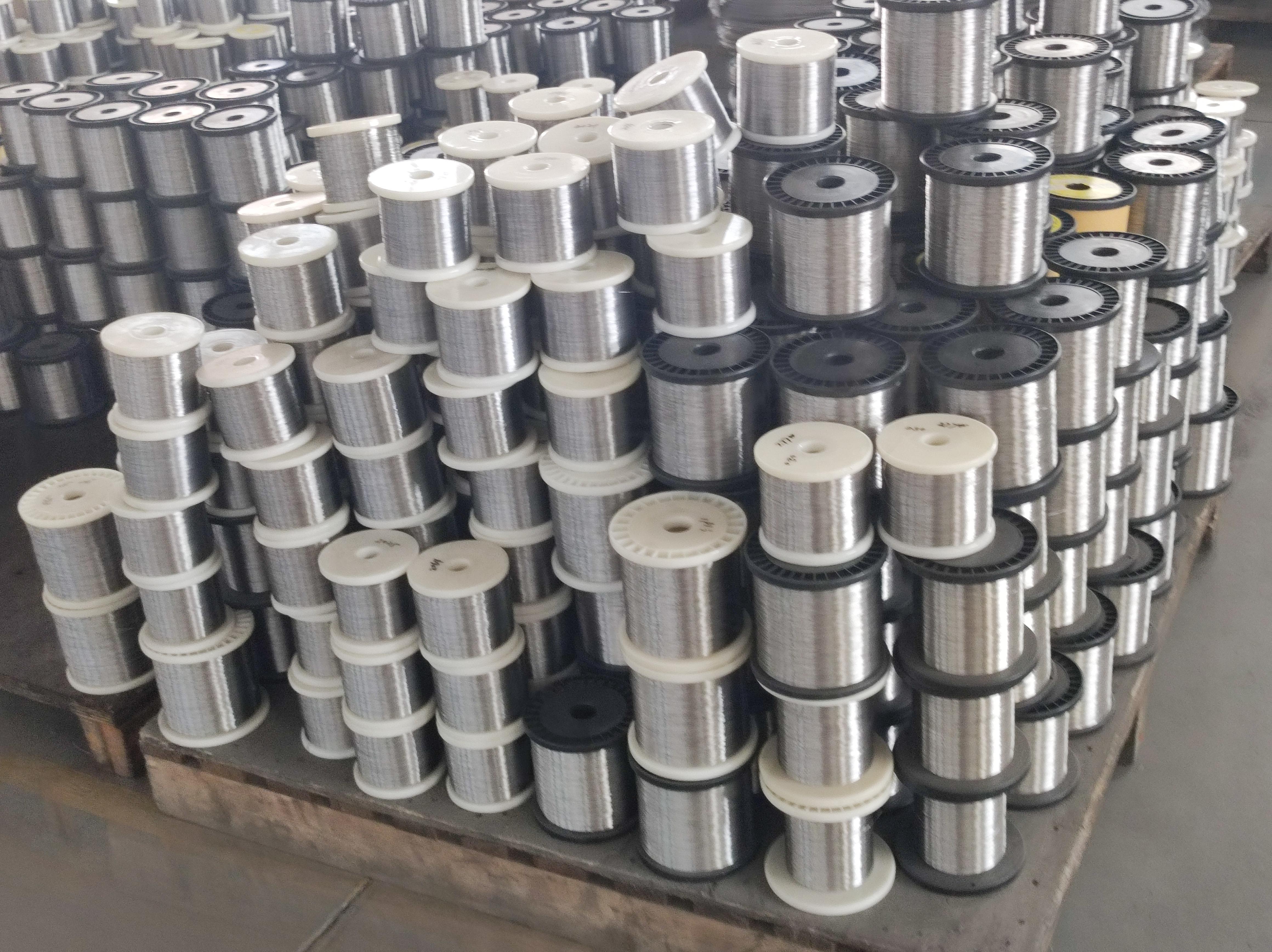
A: Absolutely. As a leading exporter, we provide precision alloys in sheets, plates, rods, wires, and custom-forged shapes tailored to your specific engineering drawings.
8. Conclusion: Partnering with DLX Metal
The success of the aerospace and hydrogen sectors in 2026 depends on the reliability of the materials used in their construction. Invar 36, Kovar, and Platinum-Iridium represent the pinnacle of metallurgical precision, providing the stability and durability required to push the boundaries of what is possible.
Why Choose DLX Metal?
Based in Changzhou, China, DLX Metal (Changzhou DLX Alloy Co., Ltd) has spent over two decades perfecting the art of precision alloy manufacturing. As a leading exporter, we combine Chinese manufacturing efficiency with world-class quality control. Our mission is to solve your most complex material challenges, ensuring your projects are delivered on time and according to specification.
Ready to elevate your project?
Visit www.dlxmetal.com or contact our technical sales team at sales11@dlx-alloy.com to request a quote or technical consultation.
Keywords: Invar 36, Kovar Alloy, Platinum-Iridium, Aerospace Alloys, Hydrogen Technology, Precision Alloys China, DLX Metal, Thermal Expansion, Electrolyzer Materials.